
2 hr
Azulejo Tile Painting Workshop with Port Wine
Paint your own Portuguese ceramic tile while sipping port and learning centuries-old traditions
Reserve
Hand-picked by our editors — only the best 5 workshops from 18 reviewed.
Verified partners for every tour, free cancellation where available, and instant confirmation on every booking.
2 hr
Paint your own Portuguese ceramic tile while sipping port and learning centuries-old traditions
Reserve
2 hr
Paint your own Portuguese ceramic tile while sipping a cocktail in central Porto's creative studio.
Reserve
2 hr
Design and paint an authentic Portuguese tile using traditional techniques in a hands-on workshop.
ReservePrices from verified partners. Availability updates in real time at checkout. Free cancellation policies apply where shown.
The landmarks, rooms, and views travelers on this tour remember — all visible on a single visit.
Learn the traditional techniques for mixing pigments used in every azulejos tile painting workshop porto session. The process uses specific mineral compounds to achieve that iconic deep blue color.
Discover patterns dating back to the 15th century. Many designs seen in an azulejos tile painting workshop porto are inspired by Moorish geometry.
Understand how ceramic pieces are transformed in high-heat ovens. This critical step ensures your work becomes a lasting memento of your azulejos tile painting workshop porto visit.
Practice the steady brush strokes required for intricate ceramic work. Instructors provide guidance throughout the azulejos tile painting workshop porto for all skill levels.
Explore the symbolic significance of blue and white colors in Portuguese architecture. This provides historical context for your azulejos tile painting workshop porto creation.
The workshop offers a hands-on creative process, while the heritage tour provides a broader look at historic landmarks in the city. They complement each other; most visitors who do both find the workshop the more personal experience.
| Feature | Top pick Tile Painting Class | Tile Heritage Walking Tour |
|---|---|---|
Experience Type |
Hands-on Workshop | Guided Exploration |
Physical Output |
Hand-painted tile | Photographic memories |
Time Commitment |
2 hours | 2–3 hours |
Core Activity |
Ceramic glazing | Walking to historic facades |
Learning Focus |
Artistic techniques | Iconography and architectural history |
| See tickets → |
Verdict: Choose the azulejos tile painting workshop porto tours if you prefer artistic creation, or select the walking tour for a deep dive into the heritage of Portuguese ceramic landmarks with these azulejos tile painting workshop porto tickets.
Choose your ticket, select your date, and reserve in under two minutes. Secure checkout handled by our verified partner.
Instant confirmation by email, with a mobile voucher you can save offline. No printing, no queuing at a collection desk.
Arrive at the entrance, show your voucher on your phone, and walk in. Most tickets include priority or skip-the-line access.
Practical details for your visit straight from our verified partners — hours, access, rules, and how to get there.
Porto, Portugal
Check your booking confirmation for exact street number
Use the Porto Metro to Bolhão or Trindade stations. From there, it is a short walk to most workshop locations.
Request a drop-off at your specific workshop address for convenience.
Casual and comfortable clothing is recommended. You will be working with paints, so wear items you do not mind getting slightly messy.
Secure storage for small personal items is provided on-site. We recommend leaving large backpacks at your accommodation as space is limited.
Photography is encouraged throughout the process. Capture your artistic progress and the traditional patterns used in your session.
The studio entrance is accessible to wheelchair users. Please contact us in advance if you require specific seating arrangements during your tile class.
Mobile phones are permitted for capturing your creative process. Please keep them on silent to maintain a focused atmosphere for other participants.
The azulejos tile painting workshop porto is suitable for all ages. Children under 12 should be accompanied by an adult to assist with the painting technique.
Water is provided during the session. We ask that you do not bring messy foods into the workspace to protect the tiles and drying racks.
Service animals are permitted within the workshop area. Non-service pets are not allowed inside the facility.
Each session involves a firing process for your tiles. Please verify if your finished pieces can be collected later or shipped to your home address.
Porto, Portugal
Check your booking confirmation for exact street number
Get directionsBest time to go, insider tips, nearby landmarks, and the cancellation fine print — flip through to skim what matters to you.
How crowds, weather, and events shift across the year.
Expect higher numbers of visitors in July and August. Book your slot for the morning to avoid the heat.
Mild temperatures make this a pleasant time for indoor crafting. Crowds begin to thin out by October.
Small details that turn a good visit into a great one.
Popular sessions fill up quickly, especially during summer weekends. Ensure you secure your azulejos tile painting workshop porto tickets online early.
You will likely be standing or moving around your workstation for most of the class. Comfortable footwear is essential for a relaxed experience.
Prepare a few patterns or colors you like before you arrive. This helps you start your azulejos tile painting workshop porto project immediately.
If you are only in the city for a day, check if the azulejos tile painting workshop porto tour provides shipping options for your finished pieces.
The azulejos tile painting workshop porto is best enjoyed when you arrive between 09:00–16:00. This ensures you have enough time to finish your design before the studio closes.
Non-bookable sights within a short walk — free to visit, easy to pair.
Famous for its lobby walls covered in thousands of blue and white tiles.
A historic bookstore with intricate neo-Gothic woodwork and interiors.
An iconic baroque bell tower offering panoramic views of the city.
The central waterway of Porto ideal for scenic walks and boat views.
Flexible, no hidden fees.
Full refunds are available if you cancel at least 24 hours before your scheduled session. No refunds are provided for cancellations within 24 hours of the 35 EUR entry workshop.
Hand-picked options within walking distance — pick a district for vibe, or a specific hotel for convenience.
Central district with numerous boutique hotels and hostels.
Porto's azulejo tradition began in the sixteenth century when King Manuel I brought Moorish tilework north from Lisbon, transforming blank façades into narrative canvases of cobalt and white. By the eighteenth century, the city's workshops were producing hand-painted tiles at industrial scale, cladding churches, railway stations, and private homes in geometric florals and biblical tableaux. The technique—tin-glazed earthenware fired twice, once for the body and once for the painted surface—remained unchanged for three hundred years. Today, fewer than a dozen ateliers in Porto still practice the traditional method, teaching visitors the same brush-loading and line-work their grandparents learned as apprentices. An azulejo tile painting workshop Porto session offers direct access to this craft lineage. Workshops take place in functioning studios, not tourist centers, where working ceramicists produce commissioned pieces for restoration projects across the Douro valley. Participants sit at the same benches used for professional work, handling eighteenth-century stencil patterns and mixing cobalt oxide from powder. The two-hour format mirrors the historical apprenticeship model: observation, replication, then improvisation within strict geometric bounds. Each tile is fired off-site and shipped within three weeks, carrying the same kiln stamp used since 1920. Porto's ceramic identity is inseparable from its architectural one. The São Bento railway station holds twenty thousand azulejos depicting Portugal's military history; the Capela das Almas is sheathed in fifteen thousand tiles showing the lives of saints. These installations were not decorative afterthoughts but structural decisions, protecting masonry from Atlantic moisture while broadcasting civic and religious narratives to a largely illiterate population. The workshops operating today occupy the same riverside district—Ribeira and Miragaia—where clay was unloaded from barges and kilns ran day and night. Participating in an azulejo workshop Porto experience places you inside that supply chain, working with materials and methods still dictated by sixteenth-century guild standards. The resulting tile is both souvenir and document, proof of a craft tradition that survived industrialization by refusing to modernize. Workshops include Port wine or cocktails, a nod to the city's dual reputation for ceramics and fortified wine, both exported globally from the same Douro riverfront. The pairing is historical, not incidental: azulejo painters drank while working, and many eighteenth-century tiles show minor tremors in their line-work, evidence of the long hours and steady hands required. Modern sessions preserve that rhythm—paint, sip, fire—connecting contemporary visitors to the social rituals of Porto's artisan past.
"The technique—tin-glazed earthenware fired twice—remained unchanged for three hundred years."
A step-by-step walkthrough of the visit — what you'll see, how long each stage takes, and the details that matter.
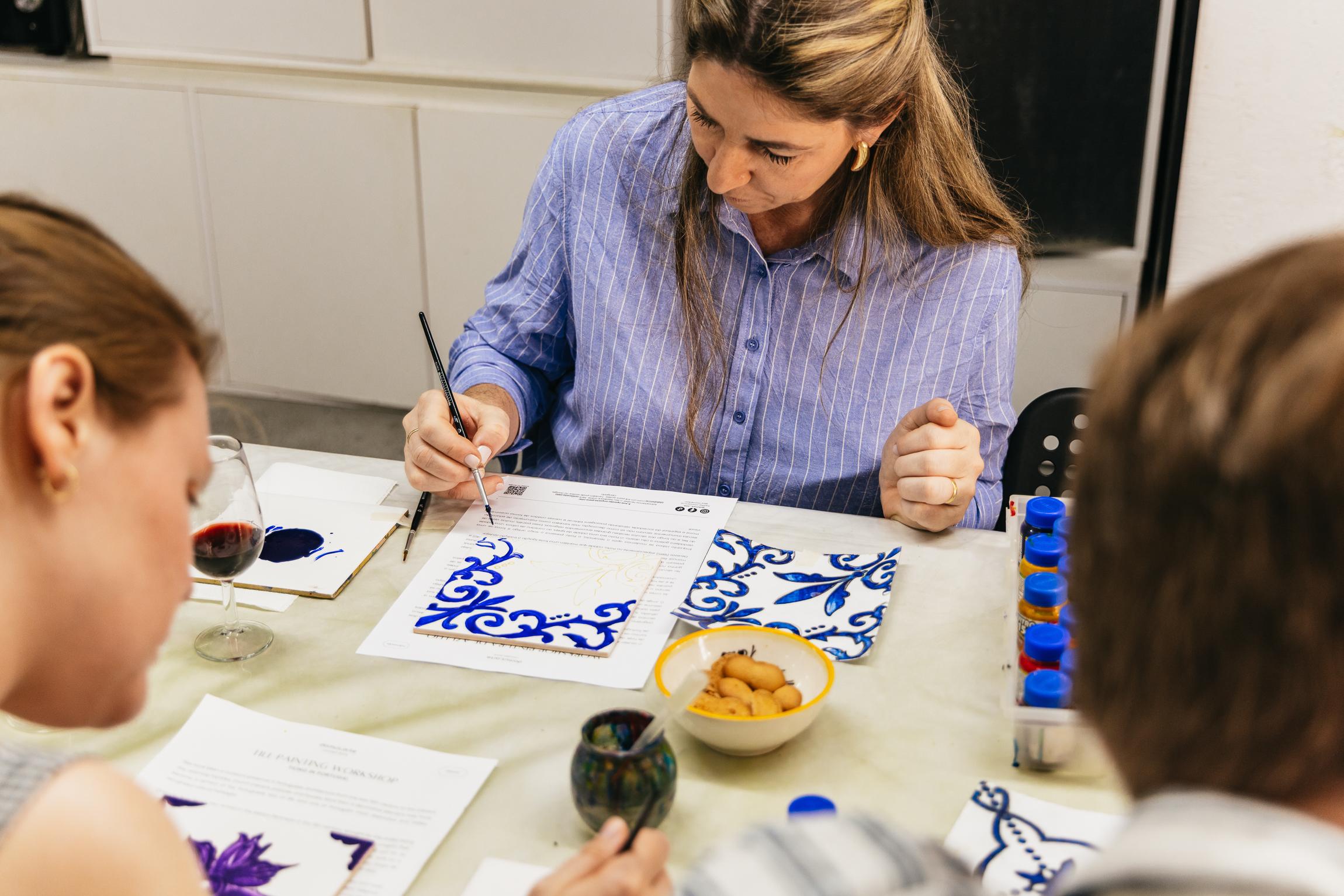
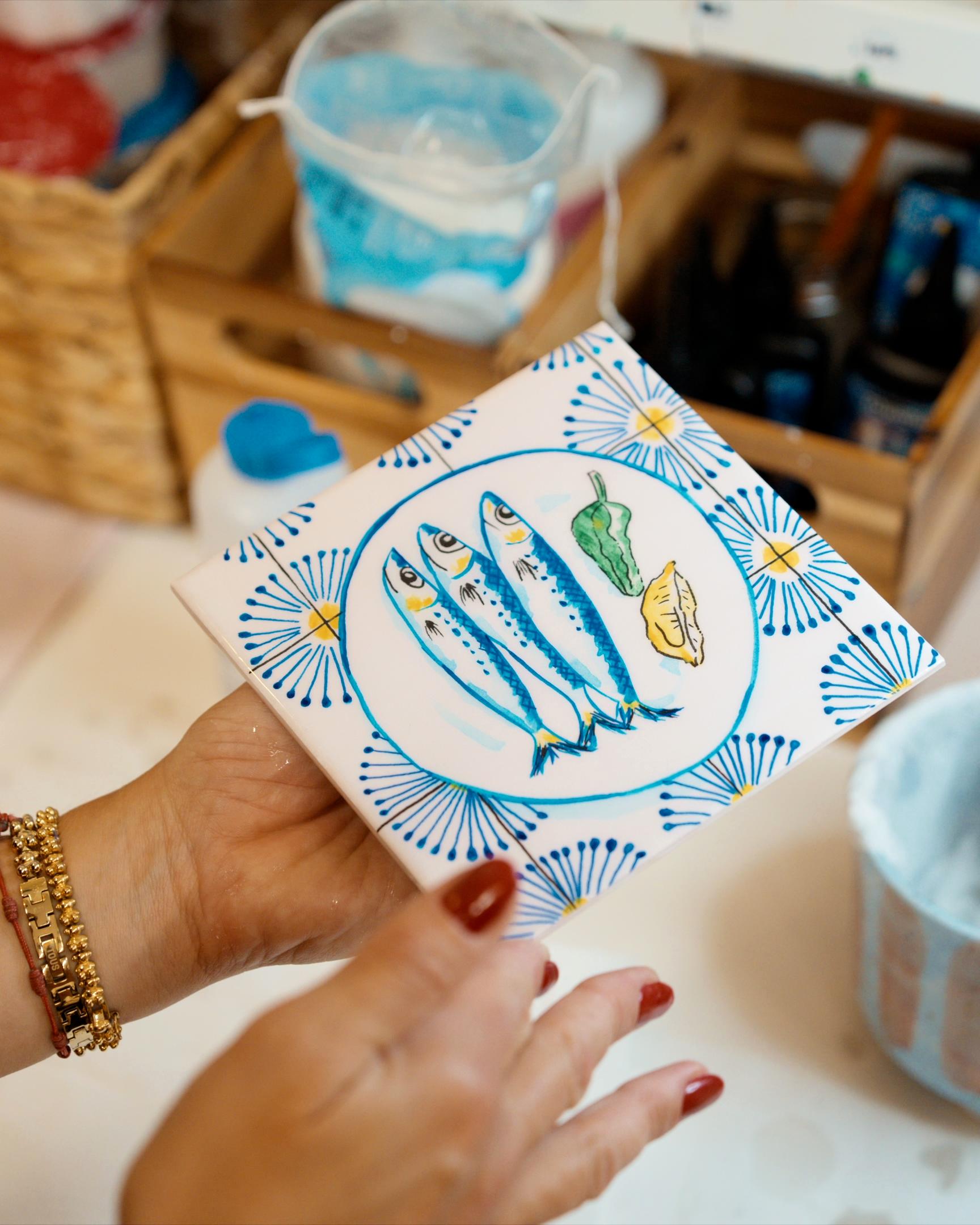
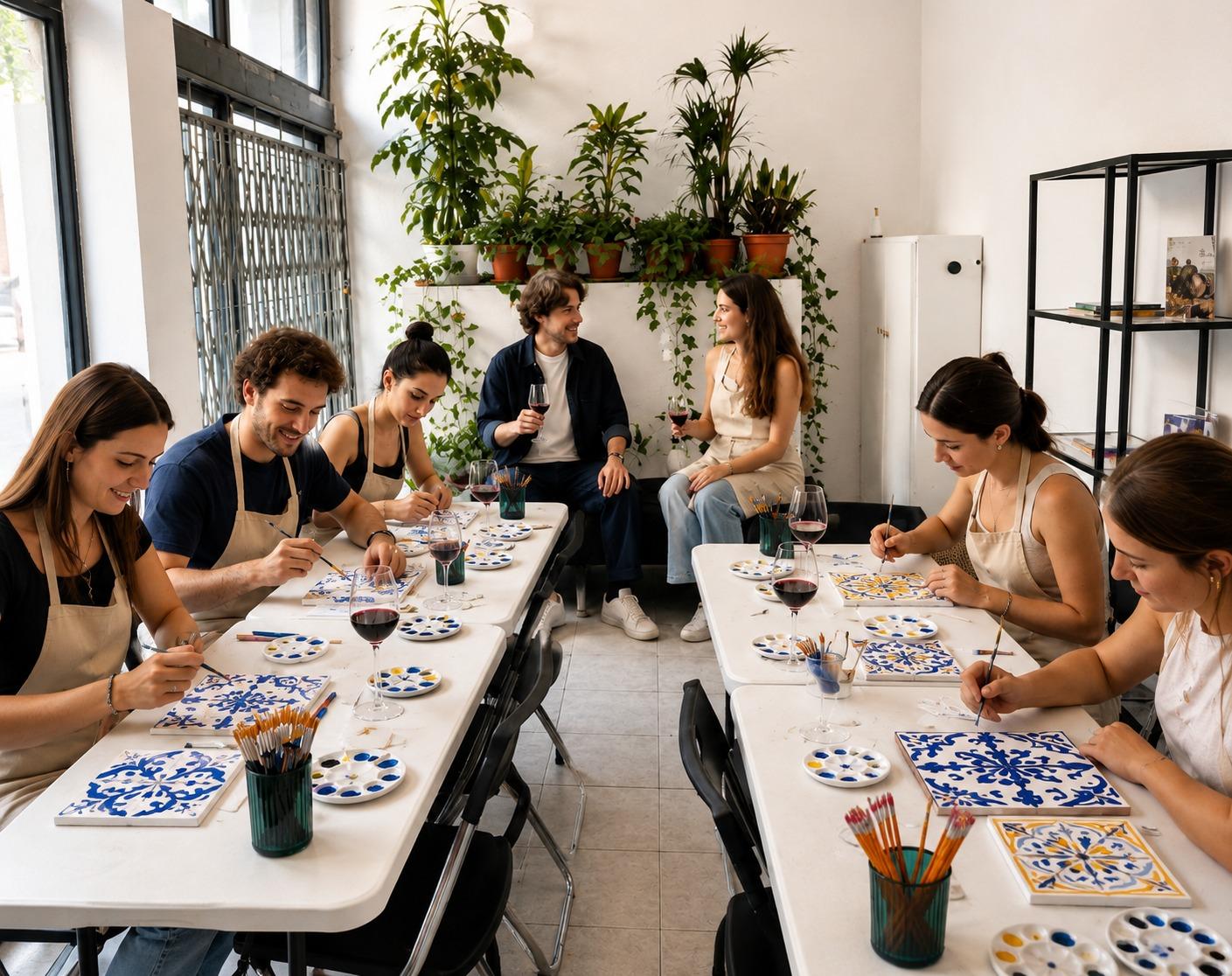
You arrive at a working atelier in Miragaia, where kilns hum behind curtained doorways and shelves hold tiles awaiting shipment to restoration sites across northern Portugal. The instructor, a third-generation ceramicist, sets a blank fifteen-centimeter tile in front of you alongside a tray of brushes, each cut from a different animal hair to hold varying amounts of cobalt slip. You begin by tracing a stencil—geometric florals, interlocking vines, or a simplified version of the patterns covering São Bento station—learning to load the brush so the line stays wet but doesn't pool. The cobalt paste looks gray on the raw glaze, a counterintuitive leap of faith; only the second firing, days from now, will turn it the saturated blue Porto is known for. Your instructor demonstrates the wrist angle required for clean curves, a technique unchanged since the Baroque period, then steps back while you improvise within the stenciled borders. Mistakes are permanent—there is no erasing wet cobalt—but imperfection is part of the record, and many historical azulejos show corrections and overpainting. You finish with Port or a house cocktail, the tile set aside to dry before its final kiln run. The studio ships it to your address within three weeks, boxed with a certificate noting the firing date and kiln number, the same documentation accompanying professional commissions.
The workshop is open daily from 09:00–18:00. We recommend arriving between 09:00–16:00 to ensure enough time for your project.
The entrance fee for a 2-hour guided session starts at 35 EUR per adult. Please check your specific booking for any additional material costs.
Yes, the studio at the azulejos tile painting workshop porto is located on the ground floor with ramp access for all visitors.
Yes, photography is permitted during your azulejos tile painting workshop porto experience. Capture the traditional patterns and your creative process.
The best time for an azulejos tile painting workshop porto tour is during the morning between 09:00 and 16:00 to avoid late-day crowds.
Wear comfortable, casual clothing to your azulejos tile painting workshop porto. It is best to choose items you do not mind getting a little paint on.
Absolutely, the azulejos tile painting workshop porto is family-friendly. It is a wonderful way for all ages to engage with local heritage.
The studio is located in Porto, Portugal, and is easily accessible via the local metro system or a short taxi ride.
You can receive a full refund for your azulejos tile painting workshop porto if you cancel at least 24 hours before your session.
Yes, you can easily combine your class with visits to the nearby São Bento Railway Station or the Clérigos Tower.