
English| EUR
Suggested for you
More currencies
Choose a language
Painting decorative tiles combines centuries-old Portuguese craftsmanship with accessible studio techniques. This guide walks you through the core methods taught in azulejo workshops at Museu Nacional do Azulejo, from surface preparation to final glazing. Whether you're new to ceramic art or expanding your painting practice, the museum's dedicated classes offer structured instruction in a historic setting.
Quick answer
Learning how to paint tiles art begins with preparing a bisque-fired ceramic surface, transferring your design using pouncing or direct sketching, applying cobalt or polychrome pigments with fine brushes, and finishing with a transparent glaze before the final kiln firing. Workshop sessions at Museu Nacional do Azulejo typically span two to three hours and include all materials, with instructors guiding participants through traditional Portuguese azulejo techniques used since the 16th century.
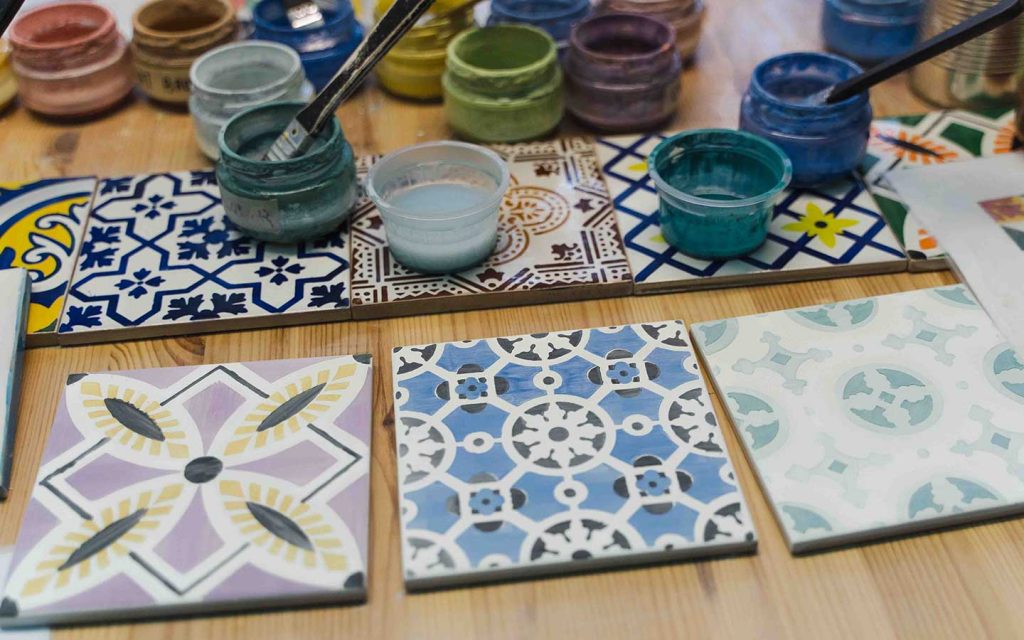
Azulejo tiles start as blank canvases that have already passed through their first firing, leaving a porous white surface ready to accept pigment. This bisque stage is critical—the tile is hard enough to handle but absorbent enough that brushstrokes settle without bleeding. Studio sessions open with design transfer, either by tracing a pattern through pricked paper or sketching freehand with charcoal that will burn away in the kiln. Brushwork follows a disciplined sequence. Cobalt oxide, the pigment that defines Portugal's iconic blue-and-white tiles, requires confident strokes because mistakes cannot be erased once the oxide bonds with the clay body. Instructors demonstrate how to load the brush with thinned pigment, control pressure to vary line weight, and layer washes to build depth. Polychrome tiles introduce manganese for purple-brown tones, copper for green, and iron for warm ochres, each oxide behaving differently under heat. Glazing transforms raw pigment into glass. A transparent lead or alkaline glaze is brushed or poured over the decorated tile, sealing the design and preparing it for the final firing at temperatures between 980°C and 1040°C. The heat fuses pigment, glaze, and clay into a single waterproof surface with the glossy finish that allows azulejos to endure outdoors for centuries. Workshop participants see their tiles enter the kiln unfired and return days later with colors fully developed—cobalt deepens from pale gray to vibrant blue, and the glaze hardens into a surface that catches light. The museum setting anchors each lesson in historical context. Surrounded by panels dating from the Manueline period through the 20th century, students observe how techniques evolved from Hispano-Moorish geometric patterns to Baroque narrative scenes. Instructors reference specific works in the collection when explaining composition, color mixing, and the logic behind repeating tile patterns that multiply a single painted square into an expansive mural. The workshops operate Tuesday through Sunday, with morning sessions recommended for natural light and quieter studio conditions.
“The heat fuses pigment, glaze, and clay into a single waterproof surface with the glossy finish that allows azulejos to endure outdoors for centuries.”
To ensure a focused and relaxed experience, plan your arrival between 10:00–16:00. This window allows you to avoid the peak mid-afternoon museum crowds.
—
Visiting mid-week offers the quietest environment for detailed artistic work. Arriving at 10:00 provides a calm start to your session.
Mild temperatures 15°C–22°C
These months offer the most comfortable climate for exploring the museum and participating in workshops. Expect larger tourist groups during these periods.
Warm temperatures 20°C–28°C
August and July experience peak visitor volume. Arriving early in the day is essential to secure a steady pace for your tile painting.
Verdict: The best time for your workshop is Tuesday to Thursday between 10:00 and 16:00 during the months of April, May, or October.
Visitors entering the Museu Nacional do Azulejo to explore the facility do so with no admission cost. Please note that tile painting classes are organized as separate paid workshops, which require individual booking.
Verdict: A typical visitor pays 0 EUR for museum entry, while the total cost for tile painting depends entirely on the specific workshop package selected.
The Museu Nacional do Azulejo is open Tuesday through Sunday. Please note that the facility remains closed on Mondays.
The Museu Nacional do Azulejo is located at Rua da Madre de Deus 4, 1900-312 Lisboa, Portugal. The facility is well-served by Lisbon's public transit network, making it accessible from various points in the city center.
759 or 794 to Museu do Azulejo stop
Santa Apolónia station followed by a short taxi or bus ride
Direct service to Rua da Madre de Deus 4
Look for the Museu do Azulejo bus stop, which is located in close proximity to the main entrance of the museum complex. Planning your transit route via the Carris or CP websites in advance is recommended for real-time schedule updates.
Mastering traditional tile painting requires careful attention to material consistency and planning for the post-workshop firing process.
Apply pigment in thin, even layers to prevent cracking or peeling during the kiln firing process. Overloading the brush leads to uneven surfaces that may bubble at high temperatures.
Use water sparingly when thinning pigments to maintain color intensity and proper adhesion to the glaze. Excess water can cause the design to spread or bleed outside the intended lines.
Remember that your tile requires a minimum two-day waiting period for professional kiln firing before it is ready for handling. Plan your travel itinerary to allow for this mandatory curing duration.
Confirm arrangements for local collection or international shipping with museum staff before beginning your session. Tiles cannot be taken immediately as they must undergo the complete firing cycle to set the minerals.
Keep hands away from the surface of the tile while painting to avoid transferring oils from your skin. Oils can interfere with the pigment's bond and result in spots or imperfections after firing.
A few practical steps will help you arrive prepared and ready to create your own tile.
Everything you need to know about how to paint tiles art
The most authentic approach involves guided sessions at the Museu Nacional do Azulejo, where you can study historic ceramic glazing techniques. Learning how to paint tiles art requires practice with pigments and brushes to master the traditional blue and white aesthetic. Hands-on workshops provide professional tools and supervision to help you create your own piece. Many sessions welcome younger participants, provided they are accompanied by an adult who can assist with the delicate process of applying glazes. Instructors ensure that the experience of learning how to paint tiles art remains engaging and accessible for all skill levels. Workshop fees are separate from general museum admission, and you should check the official booking platform for specific pricing. There is no entrance fee to visit the facility itself, though the workshops are paid experiences. When planning your visit to learn how to paint tiles art, aim for the 10:00–16:00 window to ensure a comfortable pace. This allows enough time to complete your design without rushing, as the museum is open until 18:00. Arriving within this recommended window helps you avoid mid-afternoon crowds and ensures a more focused environment for your creative work.
Tile Painting and Wine Workshops
Read more Tickets & toursAzulejo Painting Workshops in Porto
Read more GuidePorto Tile Painting Reviews
Read more Tickets & toursMosaic Painting Workshops
Read more Tickets & toursBest Tile Painting Workshops in Porto
Read more Tickets & toursTile Painting Workshop Prices
Read more