
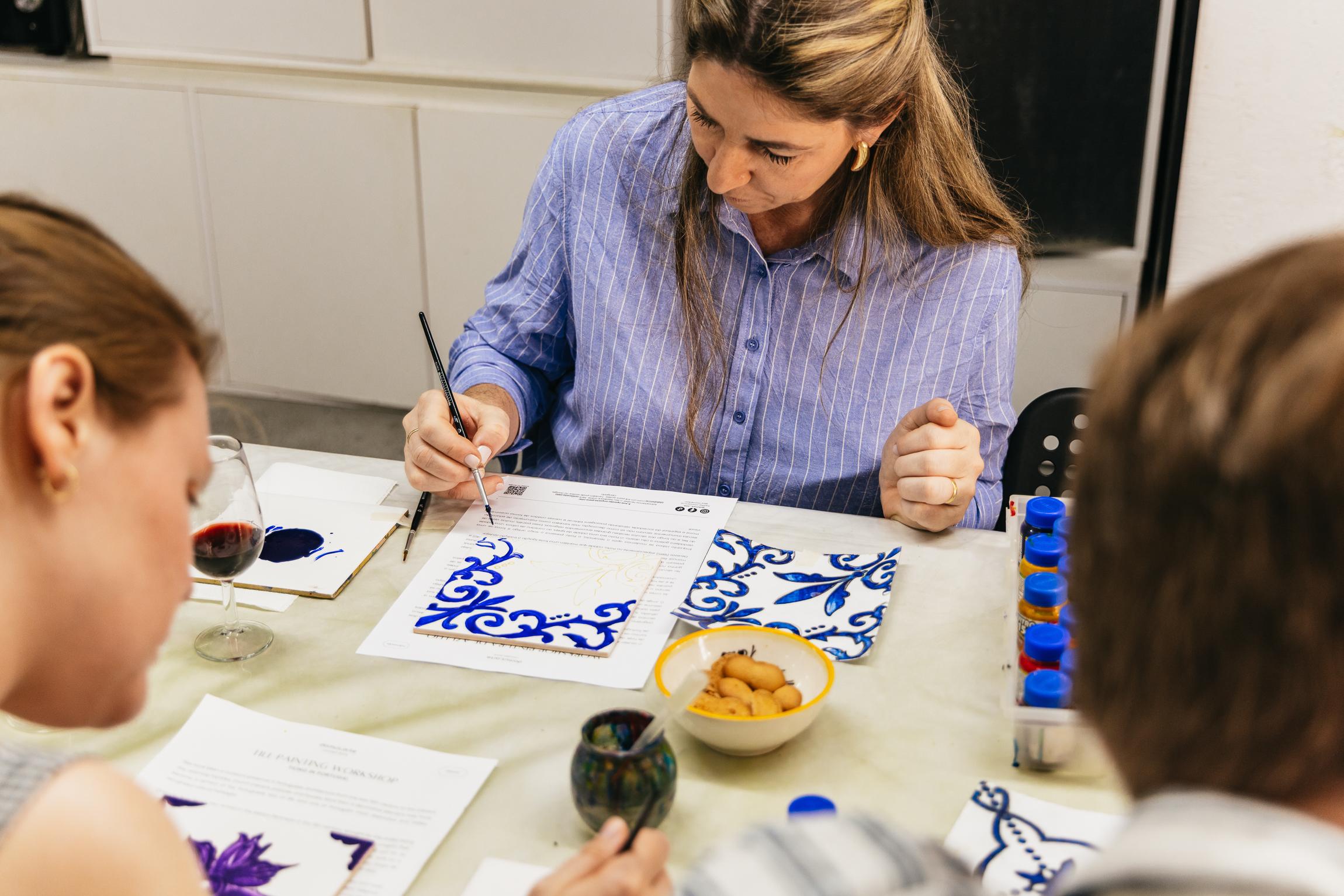
2 hr
Azulejo Tile Painting Workshop with Port & Snacks
Paint your own Portuguese ceramic tile while sipping Port wine in a hands-on art class led by local artists.
Reserve
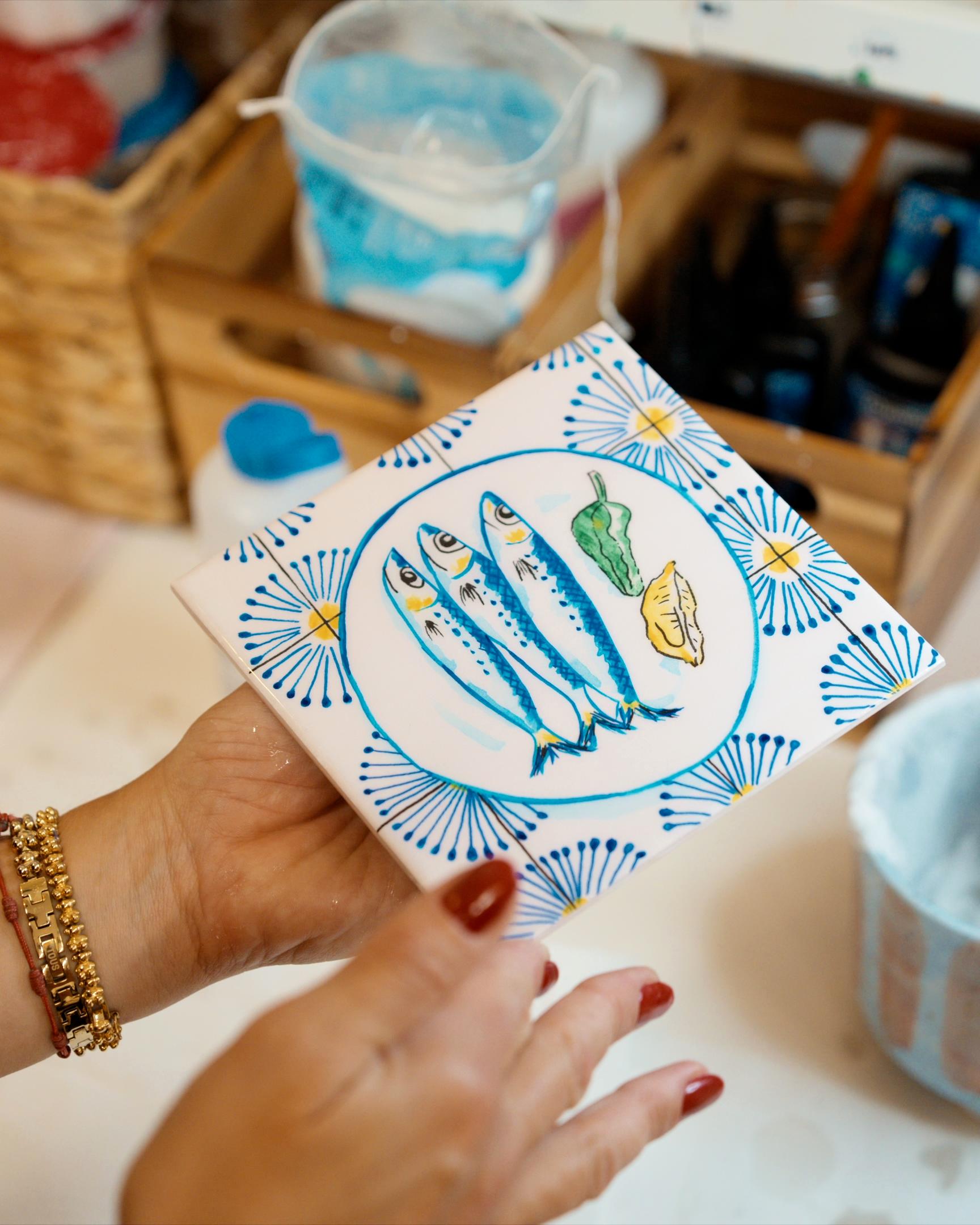
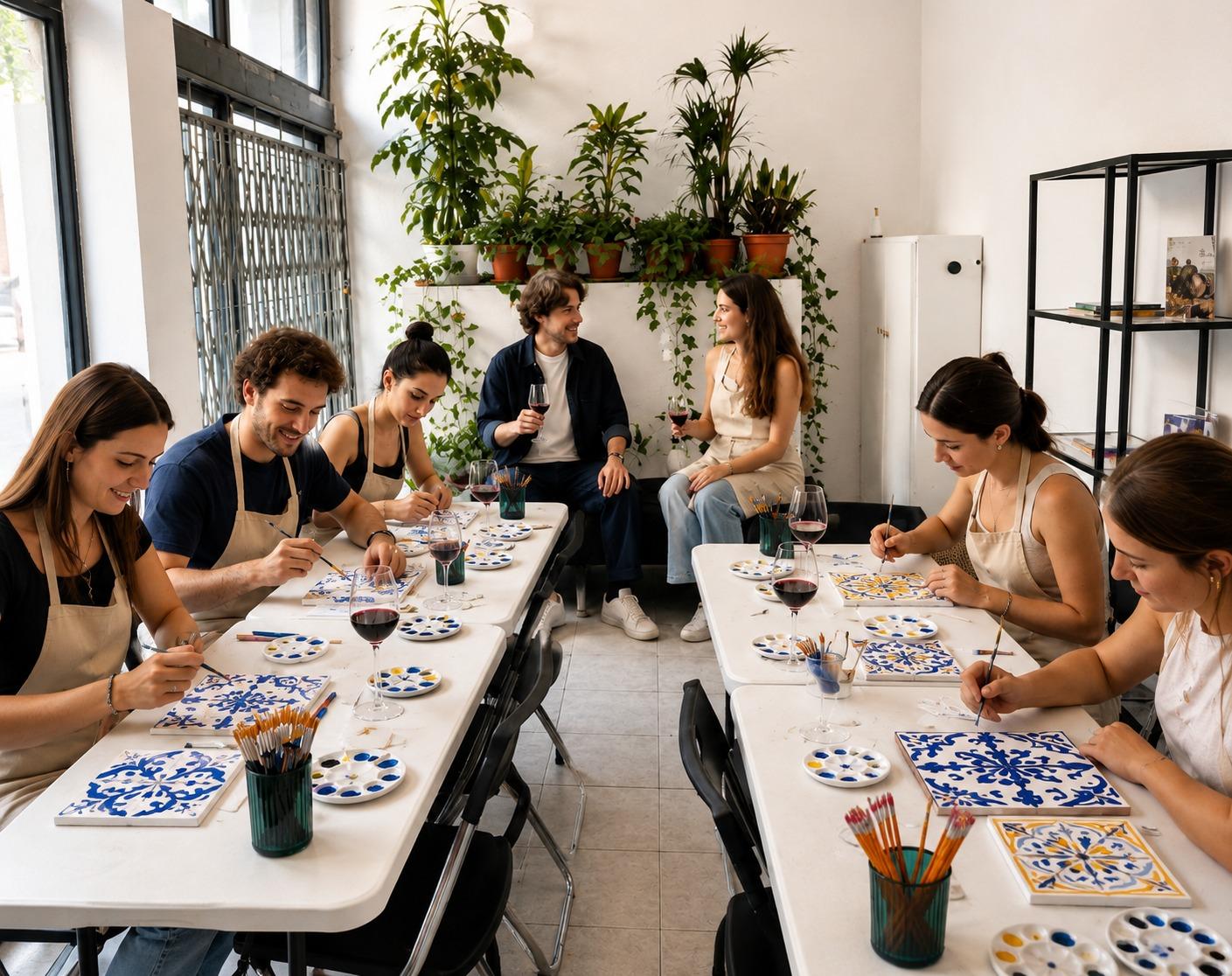
Hand-picked by our editors — only the best 5 azulejo workshops from 18 reviewed.
Verified partners for every tour, free cancellation where available, and instant confirmation on every booking.
2 hr
Paint your own Portuguese ceramic tile while sipping Port wine in a hands-on art class led by local artists.
Reserve
2 hr
Paint your own Portuguese ceramic tile while sipping cocktails and exploring centuries of azulejo history
Reserve
2 hr
Design and paint your own Portuguese ceramic tile using traditional porcelain techniques at a creative studio.
ReservePrices from verified partners. Availability updates in real time at checkout. Free cancellation policies apply where shown.
The landmarks, rooms, and views travelers on this tour remember — all visible on a single visit.
Personalized workspace equipped with traditional azulejo pigments and brushes.
A curated display showing the evolution of Portuguese ceramic art.
A relaxed area where guests enjoy Port wine during the experience.
The area where tiles are prepared for final heat treatment.
A section dedicated to the tools used in traditional tile painting.
They complement each other; visitors seeking a relaxed social atmosphere prefer the Domus Arte experience, while those interested in formal historical preservation favor Gazete Azulejos.
| Feature | Top pick Domus Arte | Gazete Azulejos |
|---|---|---|
Focus |
Creative leisure | Heritage preservation |
Vibe |
Social and relaxed | Academic and technical |
Inclusions |
Workshop and Port wine | Materials and instruction |
Primary Goal |
Artistic expression | Cultural education |
Studio Setting |
Private Rua da Bainharia studio | Specialized azulejo research center |
| See tickets → |
Verdict: Book the porto tile painting workshop with porto wine bainharia tickets for a casual afternoon of creativity, or choose the alternative if you prioritize deep historical training.
Choose your ticket, select your date, and reserve in under two minutes. Secure checkout handled by our verified partner.
Instant confirmation by email, with a mobile voucher you can save offline. No printing, no queuing at a collection desk.
Arrive at the entrance, show your voucher on your phone, and walk in. Most tickets include priority or skip-the-line access.
Practical details for your visit straight from our verified partners — hours, access, rules, and how to get there.
Rua da Bainharia, 135
Look for the studio entrance in the historic center
Use the Metro to Sao Bento station, which is a short walk away.
The workshop is centrally located in the historic district near the river.
Casual attire is recommended for the porto tile painting workshop with porto wine bainharia as you will be working with paints and ceramic materials.
Large backpacks or oversized luggage should be avoided as the workspace in the porto tile painting workshop with porto wine bainharia is intimate.
Photography is encouraged during the porto tile painting workshop with porto wine bainharia to document your creative process and the final glazed results.
The venue is located in a historic area of Porto which may have uneven cobblestones; please contact the operator if you require specific assistance.
Mobile phones are permitted for capturing photos of your artistic progress during the porto tile painting workshop with porto wine bainharia.
The porto tile painting workshop with porto wine bainharia welcomes families, though children should be supervised when handling ceramic tiles and painting tools.
A tasting of Port wine is included with the adult session of the porto tile painting workshop with porto wine bainharia.
Pets are generally not permitted inside the workshop due to the nature of the artistic materials and workspace constraints.
The porto tile painting workshop with porto wine bainharia provides all necessary materials for your session, including the ceramic substrate and pigments.
Best time to go, insider tips, nearby landmarks, and the cancellation fine print — flip through to skim what matters to you.
How crowds, weather, and events shift across the year.
Ideal for outdoor exploring after your painting session due to long daylight hours.
Pleasant temperatures for walking between nearby Porto landmarks.
Fewer crowds in the historic streets surrounding the workshop.
Cozy indoor activity suitable for rainy days in Porto.
Small details that turn a good visit into a great one.
Reserve your porto tile painting workshop with porto wine bainharia tickets well in advance to secure your preferred slot.
The paints used in the porto tile painting workshop with porto wine bainharia can stain, so dress accordingly.
Plan to visit the cathedral after finishing your porto tile painting workshop with porto wine bainharia session.
Engage with the instructors during your porto tile painting workshop with porto wine bainharia tour to learn about tile history.
Allow ample time for the glazing process if your porto tile painting workshop with porto wine bainharia provides kiln firing services.
Non-bookable sights within a short walk — free to visit, easy to pair.
A Romanesque church offering panoramic views of the city.
A neoclassical building featuring the ornate Arabian Room.
A vibrant riverside area with colorful merchant houses.
Known for its elaborate baroque gold-leaf interior.
Flexible, no hidden fees.
Full refunds are available for cancellations made within the specified provider window. Please refer to your booking confirmation for exact timing regarding the 35 EUR fee.
Hand-picked options within walking distance — pick a district for vibe, or a specific hotel for convenience.
Riverside hotel located in a historic building.
Mid-range hotel with a modern aesthetic.
Central area with numerous apartment-style stays.
Portugal introduced tin-glazed ceramic tiles to Europe in the early sixteenth century, adapting Moorish and Italian majolica techniques into a distinctly Iberian art form that would cover façades, church interiors, and palace walls across Lisbon and Porto for the next four hundred years. By the eighteenth century, azulejo production had shifted from polychrome panels to the iconic blue-and-white compositions inspired by Chinese porcelain, with workshops clustered along Porto's riverfront streets where clay, pigment, and kiln fuel arrived by boat. Rua da Bainharia, the narrow lane threading through the Ribeira district, took its name from the bainheiros—sheath-makers and leather workers—who occupied the ground floors of medieval townhouses long before ceramic studios claimed the upper rooms. Today's porto tile painting workshop with porto wine bainharia sessions unfold in renovated ateliers where natural light floods whitewashed walls and long worktables hold bisque-fired tiles, cobalt oxide, manganese brown, and copper green in shallow dishes. Domus Arte Porto, the studio anchoring the contemporary revival of azulejo instruction, offers workshops that pair the eighteenth-century albarrada technique—direct brush application of oxides onto raw glaze—with tastings of fortified wine from the Douro Valley, a pairing that mirrors the historic rhythm of artisan life when painters worked until the light failed and then descended to taverns along the Cais da Ribeira. Participants trace traditional motifs—pomegranates, acanthus leaves, geometric lattices—onto six-inch tiles using carbon paper and fine-tipped brushes, learning to control pigment density so the design survives the twelve-hundred-degree firing that fuses glaze and oxide into glass. The azulejo tradition nearly collapsed in the mid-twentieth century when industrial screen-printing replaced hand-painting and Portugal's dictatorship neglected cultural funding, but a UNESCO heritage designation in 2017 and the proliferation of independent ceramic ateliers have restored both craft knowledge and public demand. Porto's tile workshops now serve as living museums where visitors produce functional art—tiles that can be installed in kitchens, framed as standalone pieces, or shipped home as glazed souvenirs—while absorbing the material history of a medium that once clothed entire buildings in narrative and ornament. The combination of manual skill, historical continuity, and immediate sensory reward has made these ceramic painting experiences some of Porto's most sought-after cultural activities, attracting travelers who value participatory learning over passive observation.
"Azulejo production shifted to iconic blue-and-white compositions inspired by Chinese porcelain, with workshops clustered along Porto's riverfront streets where clay, pigment, and kiln fuel arrived by boat."
A step-by-step walkthrough of the visit — what you'll see, how long each stage takes, and the details that matter.
You arrive at Rua da Bainharia in mid-morning when the studio's north-facing windows cast even light across the worktables. An instructor hands you a bisque-fired tile, still porous and chalk-white, and sets out three oxide pigments—cobalt for Prussian blue, manganese for sepia, copper for jade green—alongside a porcelain palette and a selection of fine brushes with sable tips. You choose a traditional pattern from a portfolio of eighteenth-century designs: a pomegranate half-section surrounded by scrollwork, the kind that once decorated convent refectories and merchant dining rooms. Carbon paper transfers the outline onto the tile's surface, and you begin tracing the contours with diluted cobalt, learning to apply two coats for depth and one for transparency. The instructor pours a glass of ruby Port—a young Douro blend with fig and blackberry notes—and explains that the tile will spend eighteen hours in a gas kiln, where the glaze melts into glass and the oxides bloom into their final hues. You refine the scrollwork with a dry brush, lifting pigment to expose the white ground beneath, then initial the tile's reverse side. The session closes with a second pour of Port and a gallery walk through completed works drying on wire racks. Your tile, still raw and matte, will be fired overnight and shipped within two weeks, arriving as a glazed, permanent object that carries four centuries of ceramic lineage in a six-inch square.
The workshop is open daily from 00:00–23:59 to accommodate various schedules.
Yes, you can secure your spot for the porto tile painting workshop with porto wine bainharia through our official booking platform.
Children are welcome at the porto tile painting workshop with porto wine bainharia, though they must be accompanied by an adult.
The 35 EUR fee covers all painting materials and a serving of Port wine at the studio.
Yes, the porto tile painting workshop with porto wine bainharia is open seven days a week.
The location is at Rua da Bainharia, 135, which is accessible by walking from the city center.
Bring comfortable clothing and your booking confirmation for the porto tile painting workshop with porto wine bainharia.
Cancellations are managed according to the policy provided during the purchase of your porto tile painting workshop with porto wine bainharia tickets.
Yes, attractions like the Porto Cathedral are within a 5-minute walk of the studio.